Cyanotype paintings featured by Strathmore
Pleased to be featured on the Strathmore blog and their article helps illustrate my process in a clear way.
Here’s the link to the full article:
https://www.strathmoreartist.com/blog-reader/cyanotype-watercolor-and-gouache.html

December 23, 2020 | Gouache Mixed Media Watercolor
Cyanotype, Watercolor and Gouache
Artist Julia Whitney Barnes has an absolutely fascinating process for creating her stunning botanical pieces, combining cyanotype, watercolor and gouache.
WHAT IS CYANOTYPE?
Cyanotype is a cameral-ess photographic printing process invented in 1842 by scientist and astronomer Sir John Hirschel, which produces a cyan-blue print when a chemistry-coated surface is exposed to sunlight.
Julia has combined this printing process with fine art to create beautiful botanical masterpieces. Here is a look at her process.
STEPS:
► Julia cuts a roll of our 400 Series Watercolor paper to size. This is a heavyweight paper at 140lb/300gsm and is manufactured to withstand wet media techniques, making it an ideal choice for Julia's process.
► The watercolor paper is coated with cyanotype chemistry, causing it to have a temporary greenish color.
► Julia uses real plants grown locally in her Hudson Valley home garden. Each selected flower is preserved through a pressing process in which she dissects and shapes each form (akin to a specimen from a natural history museum) then lays everything out in massive flat files in her attic studio.
► She meticulously lays out the pressed flowers in an elaborate composition at night.
► The piece is then exposed to natural or UV light to create the cyan-blue print.
► After the cyanotype process is complete and the design is "printed" by exposure to light, she uses a mix of watercolor and gouache to paint the negative areas of the paper, creating her final masterpiece.
Mural highlighted in Apartment Therapy "12 Best Bedrooms We've ever seen"
During the early months of Covid lockdown I decided to transform my daughter’s bedroom with a collaborative work. It was highlighted in Apartment Therapy and then selected as #8 in their top 12 bedrooms, ever.
https://www.apartmenttherapy.com/best-kids-room-makeovers-36841253
Here’s the link to the original article that highlighted the children’s room mural I made with my daughter this spring.
https://www.apartmenttherapy.com/colorful-mural-kids-bedroom-diy-3675746
Before and After: A $36 Project Turns a Plain Bedroom into a Colorful Wonderland
published MAY 27, 2020
Glow in the dark stars used to be the marker of an ultra cool kid’s room, but nowadays these spaces have gotten even cooler—especially when your mom is an artist, like Julia Whitney Barnes. Julia typically works on wall and floor paintings for public and private venues, but this time Julia put her talents to use on her daughter’s bedroom using only materials she already had.
Previously, Julia and her family had been living in Brooklyn, but the need for two art studios and enough space to parent and raise kids led them to head to the Hudson Valley. There, they found a charming 1917 home. They removed the carpet, refinished the wood floors, and painted over the “split pea green” walls. But other than furnishing, they didn’t do much to their young daughter’s room. “Our son was born almost two years ago and they pretty happily share the room now. It is the smallest room in our house, yet so often we find the whole family (including our dog piled) in here,” Julia says. The magnetism of the room was one of a few reasons that it became the perfect candidate for a little makeover.
Because of the pandemic, there was plenty of extra time for art, and an idea that sprung from these creative periods ended up developing into the initial inspiration for the mural. “The walls are all original plaster in here and have a strange texture from their 100 years of life and I wanted to disguise the irregular surface and make the rather small room appear larger by accentuating the high ceilings,” Julia says. “Since the days were all starting to blur together, I was motivated to do something that would have an impact on our daily lives and bring joy to a somber time.”
The project took a week from beginning to end. Julia first did a small collage to plot out the colors and shapes for her mural, then made the painting come to life all on her own. All of the paint came from Julia’s existing inventory, so the only money she spent was on a fresh can of polyurethane sealer—just $36.
Julia used a mix of bold pinks, blues, purples, greens, and yellows from brands like Farrow and Ball, Benjamin Moore, Behr, and Glidden Paints. Following the color, she painted on the polyurethane as a matte top coat to ensure the mural would stay vibrant and last longer. In the closet area, Julia incorporated a chest of drawers with colors that matched those in the mural. A cozy little bed from Sprout Kids in one corner of the room feels like it’s in the middle of a magical garden.
Julia’s mural project totally transformed the basic room, turning the walls into art. “I love how the painting brings new life to the room and our whole family’s life,” Julia says. “It is also really satisfying that it was made with materials just laying around,” says Julia.
Inspired? Submit your own project here.
Melissa Epifano
CONTRIBUTOR
Melissa is a freelance writer who covers home decor, beauty, and fashion. She’s written for MyDomaine, The Spruce, Byrdie, and The Zoe Report. Originally from Oregon, she's currently living in the UK.

Arts Brookfield Commission at One Pierrepont Plaza, Brooklyn Heights
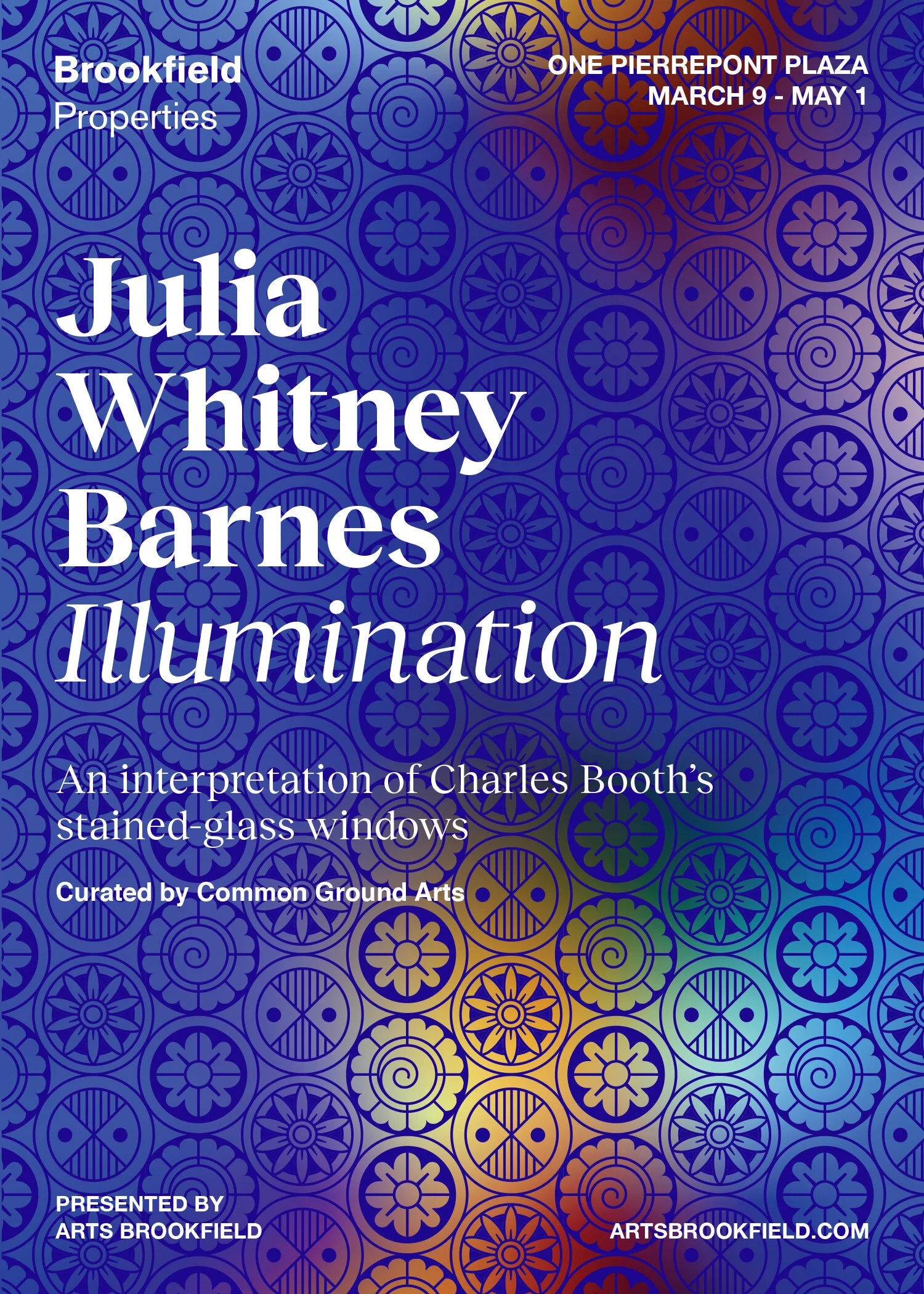
JULIA WHITNEY BARNES: ILLUMINATION
Julia Whitney Barnes
exhibition, installation, visual art
March 9, 2020 - May 1, 2020
8:00 AM - 10:00 PM
One Pierrepont Plaza
300 Cadman Plaza W
Brooklyn, NY 11201
https://www.artsbrookfield.com/event/julia-whitney-barnes-illumination/
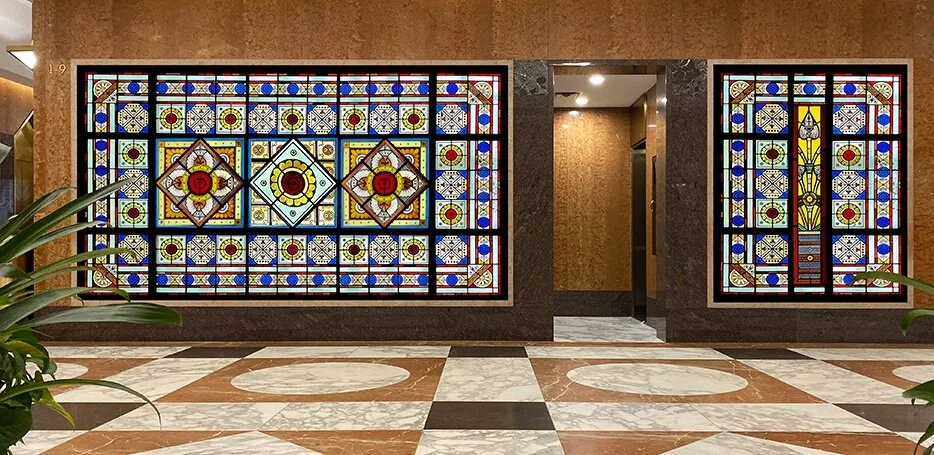
Multi-disciplinary artist Julia Whitney Barnes creates site-specific installations inspired by richly patterned architectural elements of buildings observed firsthand, as well as through collected images and videos. The inspiration for Illumination sparked from experiencing the exquisite stained-glass windows by artist Charles Booth located at the Brooklyn Historical Society, just down the street from One Pierrepont Plaza. Booth was a largely unknown stained-glass artist of the Victorian era, and Whitney Barnes also studied his work at The Jefferson Market branch of the New York Public Library in Lower Manhattan; as well as at Grace Church, Calvary Church, and Trinity Church, all in Manhattan. Whitney Barnes’ deep interest in history brings attention to Booth’s surviving works, while also imagining what some of his now lost windows may have once looked like. For Illumination, she took hundreds of photographs of Booth’s windows from multiple angles and used them as a point of departure for creating her own digital versions, using Booth’s varied themes in new and different ways and adjusting his traditional palette. These new adapted interpretations, have been printed on vinyl and adhered to the marble lobby walls of One Pierrepont Plaza, creating an illusion of illuminated stained-glass windows, and providing a unique opportunity for viewers to see this kind of artwork at eye level.
The artist encourages viewers to visit the Brooklyn Historical Society and Jefferson Market New York Public Library to see the original Booth windows and experience these unique historic buildings. The Brooklyn Historical Society building, designed by George Post in 1878-80, was originally called the Long Island Historical Society. It was one of the earliest buildings in the area to use terra cotta trim. About 90% of George Post’s impressive structures around New York City were demolished to make way for modern skyscrapers. The New York Stock Exchange is one of Post’s most famous structures left intact. A plaque on the exterior of the Jefferson Mark New York Public Library, originally the Jefferson Courthouse building, states “This building, designed along Victorian Gothic Lines by Vaux & Withers, was constructed in 1876 and served as a women’s court until 1932. Of particular interest are its turrets, traceried windows, ironwork and sculpture.” Booth’s windows for the Jefferson Courthouse appear to incorporate imagery that resembles female anatomy, which is fitting.
ABOUT THE ARTIST:
Born in Newbury, VT, Julia Whitney Barnes spent two decades in Brooklyn, before moving to the Hudson Valley, where she now lives with her photographer husband and two children. Whitney Barnes received her BFA from Parsons School of Design and her MFA from Hunter College, both in New York, NY. Her work is executed in a variety of media, from oil paintings, ceramic sculptures, murals, drawings, etchings, and site-specific installations. Whitney Barnes has exhibited in the United States and internationally, including at Front Room Gallery, New York, NY; Brooklyn Historical Society, The Old Stone House, and Trestle Gallery, all Brooklyn, NY; Mattaewan Gallery, Beacon, NY; Cunneen Hackett Arts Center, and WomensWork Gallery, both Poughkeepsie, NY; ArtsWestchester, White Plains, NY Institute of Contemporary Art and International Crytopzoology Museum, both Portland, ME; and Siena Art Institute, Italy, among many others. Whitney Barnes has created site-specific installations at the Wilderstein Sculpture Biennial, Rhinebeck, NY; The Trolley Barn/Fall Kill Creative Works, Poughkeepsie, NY; GlenLily Grounds, Newburgh, NY; ArtsWestchester, White Plains, NY; Gowanus Public Arts Initiative, Brooklyn, NY; Space All Over/Fjellerup Bund i Bund & Grund, Fjellerup, Denmark; Lower Manhattan Cultural Council/Sirovitch Senior Center, and the New York City Department of Transportation, both New York, NY; and Figment Sculpture Garden, Governors Island, NY, among other locations. Her work has been featured in The New York Times, USA Today, The Village Voice, Brooklyn Magazine, HuffPost, and Hyperallergic, among other publications. She was awarded fellowships from New York State Council on the Arts administered through Arts Mid-Hudson, Lower Manhattan Cultural Council, and the Gowanus Public Art Initiative. She is on faculty at Marist College in Poughkeepsie, NY. Learn more at juliawhitneybarnes.com and follow the artist on Instagram at @juliawhitneybarnes.
ABOUT CHARLES BOOTH (1844-1893)
Born in Liverpool, England, he was first listed in the NYC directories as “stainer” (stained-glass artist) in the 1875-76 publication. He lived in Orange, NJ and had workshops at 166 Fifth Avenue and then 47 Lafayette Place in Manhattan. Booth’s time in NYC was quite brief as he returned to London, England in 1880 to take over George Edward Cook’s studio while still maintaining a NYC branch of his operations. Cook was best known as a painter, primarily working in stained glass during the 1870s with an emphasis of elements in a Japanese style. Booth was part of the Aesthetic Movement and considered himself to be an ornamentalist working in an Anglo-Japanese style that was popularized in the 1870s by Charles Dresser. His style incorporated some recognizable Modern Gothic motifs and geometricized plant forms. Although Booth died in 1893, the last listing for his studio in NYC was 1905/06. According to his will, made in 1884, Booth desired “that his business be carried on in England and America,” and thus the workshop continued to operate under his name even after his death. How fitting that over 125 years after his passing, his legacy will be reinvigorated with a new creation in his honor.
"Botany of Poughkeepsie" solo show presented by Cocoon Visual Arts Initiative

Cocoon Theatre Visual Arts Initiative presents
Julia Whitney Barnes
Botany of Poughkeepsie
October 4–27, 2019
At Cunneen Hackett Art Gallery on 12 Vassar St. Poughkeepise NY 126901
Opening Reception: Friday, October 4, 5–8 pm
Artist’s Talk: Saturday, October 26, 2–3:30 pm
Cocoon Theatre Visual Arts Initiative is pleased to present Botany of Poughkeepsie, an exhibition of recent work by Julia Whitney Barnes at the Cunneen-Hackett Arts Center located at 12 Vassar St., Poughkeepsie, NY. Comprised of combined media encaustic works on panel, the show will be on view from October 4–27. The exhibition is the first time this body of work, which was created from 2016–2019, will be shown.
Botany of Poughkeepsie features works on paper mounted on wood panel and coated with encaustic media and pigments. Several photographic processes are used, including cyanotypes, paper lithographs, and toner prints, all of which are made without a camera. Drawing and collage are also frequently employed in the layers beneath the wax. Cunneen-Hackett's north-facing gallery will be filled with cyanotype-based works, which utilize the negative space surrounding each botanical composition. The south-facing gallery will be filled with paper lithograph and toner-printed works that focus on the positive space of each botanical composition.
In the summer of 2015, Julia Whitney Barnes moved from Brooklyn to a hundred-year-old house in the City of Poughkeepsie, along with her photographer husband, Sean Hemmerle. Four weeks later, she gave birth to their daughter, Magnolia. Instead of a baptism for the baby, the couple organized a tree planting ceremony and positioned a magnolia tree in their front yard, including the placenta as fertilizer. This small act was the beginning of the artist’s intimate connection to plants growing in her yard. After the birth of their son August in 2018, the couple had a similar ceremony with a dogwood tree in their back yard.
Throughout the eighteen years Whitney Barnes lived in New York City, one of the things she felt most lacking was a direct relationship with nature. After moving to Poughkeepsie, the influence of having green space of her own for the first time in her adult life started to creep into her studio process. The simple action of frequently going outside, then inside, then outside again made Whitney Barnes think about interior/exterior in formal and metaphorical ways.
In this series, Whitney Barnes approaches each growing thing with equal importance regardless of whether it is a weed, rare species, wildflower, or cultivated flower. Most works have several species fused into one composition, often to the point where the exact plants depicted are open to interpretation.
Reading Michael Pollan’s influential book “Botany of Desire” – a decade before her move to Poughkeepsie – planted the seed for the way Whitney Barnes would come to think about the natural world. The publisher’s teaser for the text explains:
Every schoolchild learns about the mutually beneficial dance of honeybees and flowers: The bee collects nectar and pollen to make honey and, in the process, spreads the flowers’ genes far and wide. In “The Botany of Desire,” Michael Pollan ingeniously demonstrates how people and domesticated plants have formed a similarly reciprocal relationship. He masterfully links four fundamental human desires—sweetness, beauty, intoxication, and control—with the plants that satisfy them: the apple, the tulip, marijuana, and the potato. In telling the stories of four familiar species, Pollan illustrates how the plants have evolved to satisfy humankind’s most basic yearnings. And just as we’ve benefited from these plants, we have also done well by them. So who is really domesticating whom?
Honeybees were also integral to the creation of Botany of Poughkeepsie. Beyond pollinating the plants that became the source imagery, bees made the wax that is the primary ingredient of encaustic medium. To honor their contribution, Whitney Barnes will be donating 10% of sales from this show to Hudson Valley Bee Habitat, an organization dedicated to saving bees through the arts.
Whitney Barnes’s home is near Springside, the “country estate” of Vassar College founder Matthew Vassar. Showing this work at Cunneen-Hackett helps foster a connection to the artist’s own “Poughkeepsie Paradise.” Cunneen-Hackett's landmarked Victorian building at 12 Vassar Street was underwritten by John Guy Vassar and Matthew Vassar Jr., nephews of Matthew Vassar, and was created to bring the arts, culture, and the discussion of science and nature to the City of Poughkeepsie. Botany of Poughkeepsie pays homage to the original intention of the building with this site-specific installation of Victorian era inspired imagery.
ARTIST BIOGRAPHY:
Julia Whitney Barnes received her BFA from Parsons School of Design and MFA from Hunter College, both in New York, NY. She has exhibited throughout the United States and abroad and her work has been featured in The New York Times, Chronogram Magazine, Brooklyn Magazine, Hyperallergic, The New York Sun, USA Today, and The Poughkeepsie Journal amongst many more. Whitney Barnes is the recipient of fellowships from Arts Mid-Hudson, Arts Westchester, the Lower Manhattan Cultural Council, Abbey Memorial Fund for Mural Painting/National Academy of Fine Arts, and the Gowanus Public Art Initiative. She completed public art projects in Fjellerup, Denmark through funding from Kulturpuljen, Norddjurs Kommune, Denmark in 2013 and in New York through the NYCDOT Urban Art program in 2011. Whitney Barnes’s installation Hudson River of Bricks, comprised of thousands of historic bricks, was shown at The Trolley Barn, Poughkeepsie, NY; Arts Westchester, White Plains, NY; GlenLily Grounds, Newburgh, NY; and most recently at Wilderstein Sculpture Biennial, Rhinebeck, NY. Whitney Barnes also creates site-specific paintings on walls and floors in public and private spaces. She is on the faculty at Marist College and a CSA member of Poughkeepsie Farm Project.
For further information:
Andrés San Millán andrescocoon@gmail.com 845.663.6273
Gallery Hours: Monday–Friday, 1–5 pm and by appointment
Please note: If you arrive at the gallery and it appears closed, call the Cunneen-Hackett Arts Center office 845.486.4571 across the street at 9 Vassar St.
INFORMATION ON TECHNIQUES:
Cyanotype is a photographic printing process that produces a cyan-blue print. Engineers used the process well into the 20th century as a simple and low-cost process to produce copies of drawings, referred to as blueprints. The process uses two chemicals: ferric ammonium citrate and potassium ferricyanide. The English scientist and astronomer Sir John Herschel discovered the procedure in 1842. Though Herschel developed the process, he considered it mainly a means of reproducing notes and diagrams, as in blueprints. Starting in 1843, Anna Atkins created a series of cyanotype limited-edition books that documented ferns and other plant life from her extensive seaweed collection, placing specimens directly onto coated paper and allowing the action of light to create a silhouette effect. By using this photogram process, Anna Atkins is sometimes considered the first female photographer.
Lithography uses simple chemical processes to create an image. For instance, the positive part of an image is a water-repelling ("hydrophobic") substance, while the negative image would be water-retaining ("hydrophilic"). Thus, when the plate is introduced to a compatible printing ink and water mixture, the ink will adhere to the positive image and the water will clean the negative image. This allows a flat print plate to be used, enabling much longer and more detailed print runs than the older physical methods of printing (e.g., intaglio printing, letterpress printing). Lithography was invented by Alois Senefelder in the Kingdom of Bavaria in 1796. In the early days of lithography, a smooth piece of limestone was used (hence the name "lithography": "lithos" (λιθος) is the ancient Greek word for stone). After the oil-based image was put on the surface, a solution of gum arabic in water was applied, the gum sticking only to the non-oily surface. During printing, water adhered to the gum arabic surfaces and was repelled by the oily parts, while the oily ink used for printing did the opposite.
Encaustic is a Greek word meaning “to heat or burn in” (enkaustikos). Heat is used throughout the process, from melting the beeswax and varnish to fusing the layers of wax. Encaustic consists of natural bees wax and dammar resin (crystallized tree sap). The medium can be used alone for its transparency or adhesive qualities or used pigmented. Pigments may be added to the medium, or purchased colored with traditional artist pigments. The medium is melted and applied with a brush or any tool the artist wishes to create from. Each layer is then reheated to fuse it to the previous layer. The wax encaustic painting technique was described by the Roman scholar Pliny the Elder in his Natural History from the 1st Century AD. The oldest surviving encaustic panel paintings are the Romano-Egyptian Fayum mummy portraits from Egypt around 100–300 AD, but it was a very common technique in ancient Greek and Roman painting. It continued to be used in early Byzantine icons, but was eventually abandoned in the Western Church. Encaustic art has seen a resurgence in popularity since the 1990s with people using electric irons, hotplates and heated styli on different surfaces including card, paper, and even pottery.
(Technical information paraphrased from Wikipedia)
"Hudson River of Bricks" included at Wilderstein Sculpture Biennial
A site-specific version of my “Hudson River of Bricks” installation is on view in the 5th Outdoor Sculpture Biennial Exhibition at Wilderstein Historic site from June 1 - Oct 31, 2019.
On view daily from 9am till 4pm at 330 Morten Road, Rhinebeck, NY 12527


Featured artist for Barrett Art Center Springraiser at Locust Grove on March 3
Interview with Barrett Art Center
Happy to share this interview with Barrett Art Center edited by The Art Effect.

Julia Whitney Barnes interview February 2019
"Hudson River of Bricks" at ArtsWestchester in "Brick to Brick"

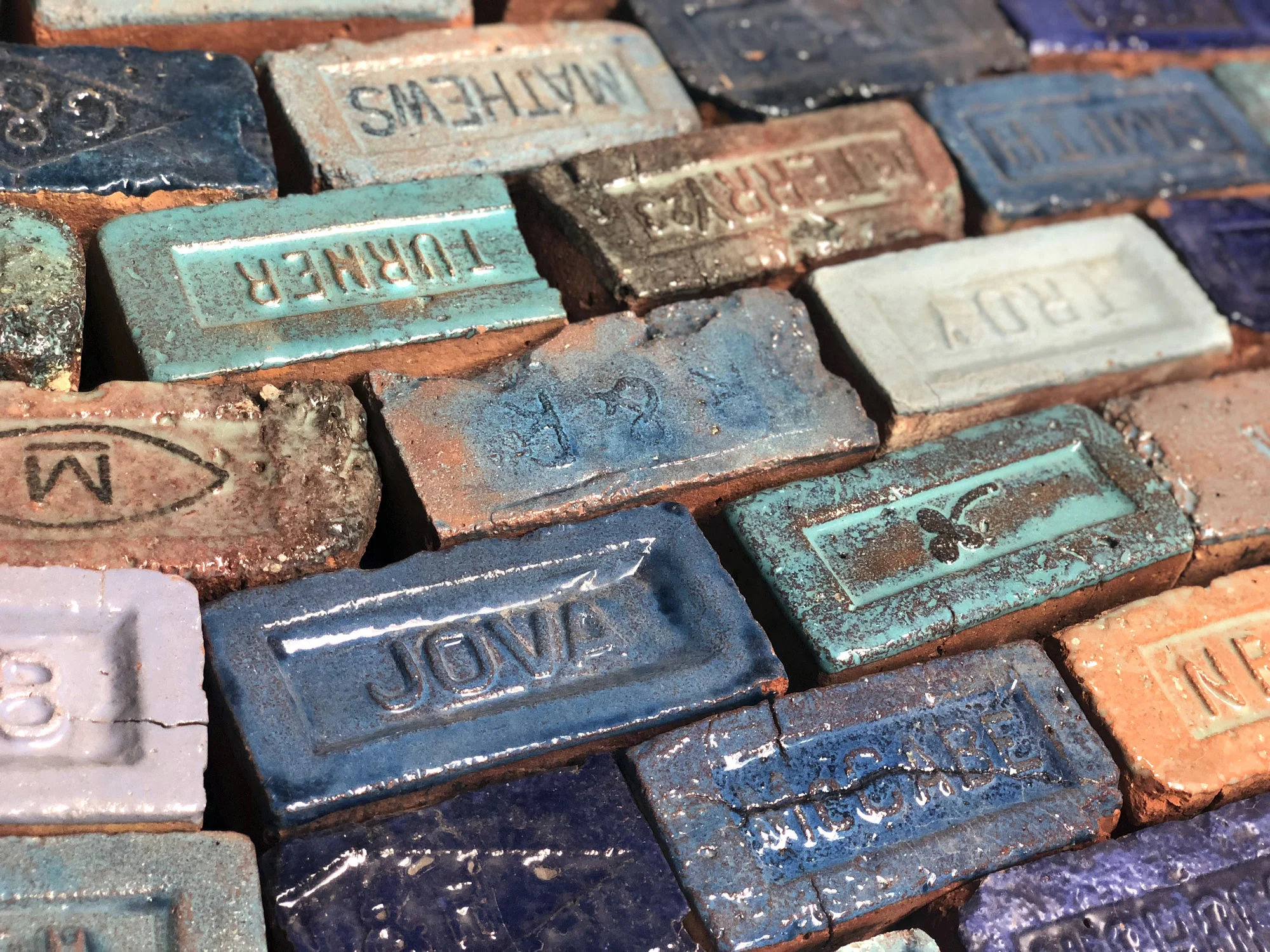
"Hudson River of Bricks" in process at ArtsWestchester
ArtsWestchester Gallery
31 Mamaroneck Avenue, White Plains, NY
"Brick by Brick: The Erie Canal & the Building Boom"
Opening Sunday, Sept. 30, from 4-6pm
Staying on view through Jan. 19, 2019
“Brick by Brick: The Erie Canal & the Building Boom” is a contemporary art exhibition inspired by the shared story of the Erie Canal, the Hudson Valley brickyards and the families who built them. The Erie Canal’s enduring influence on NY State is seen in cities and towns all along its corridor: in the now converted warehouses of Red Hook and Rochester, in the townhouses of Manhattan and waterfront buildings of Peekskill, and in historic landmarks like the Oneida Community Mansion House, the Empire State Building and ArtsWestchester’s own headquarters (The People’s Bank & Trust Building.) Brick is ubiquitous in NY, yet the interconnected story of the Erie Canal and the state’s brick industry is little known. This significant infrastructure project brought economic prosperity to every stop along its route, from Buffalo to the Canal’s terminus in Brooklyn, igniting a statewide building boom and a significant brick industry that touched hamlets throughout the state. Bricks moved along the waterways in all directions.
With its beginnings in the 1700s and New York’s early Dutch settlers, the story of brick-making in the Hudson Valley is a truly American story, rich with complex and challenging intersections of immigration, industry and innovation; of family enterprise, environmental impact and economic development. While the state’s brick industry faded after World War II, its byproducts are still present today in the cultural and physical composition of our towns and cities. Sidewalks, canal stations, municipal buildings, homes of all sizes, public works, factories and storehouses were built with Canal corridor brick.
With NYSCA support, ArtsWestchester will commission NY artists to produce new work inspired by the Canal corridor brick industry. The artwork will be exhibited at ArtsWestchester alongside historic brick collections, recorded oral histories of brickyard families, and tools representing brick-related occupational arts (i.e., making, building and conservation.)
EXHIBITING ARTISTS
Two paintings in "Frabjous" at the historic Church of St. Paul the Apostle in Manhattan

September 7 - October 25th, 2018
Opening reception: September 14th, 2018, 7-9 pm
Artists Walk-through (guided tour led by the curators): October 11th, 7- 9 pm
For more information: mail@openingsny.com
Press Contact: Frank Sabatte 212-265-3209 ext. 218
www.openingsny.com
Location: The Church of St. Paul the Apostle / corner of Columbus Ave & W60th, Manhattan
Daily Hours: M-F 8am -5:00pm / Sat. 8-6 / Sun. 8-6:30pm
"O frabjous day! Callooh! Callay!”
“Jabberwocky”, Lewis Carroll, “Through the Looking Glass and What Alice Found There”
Let it never be said that this exhibition lacks a theme. All exhibitions need a theme and this one can be gotten from its title, “Frabjous,” meaning delightful, wonderful, superb. Each of the works in this exhibition contains one of these qualities, many two, and some all three. Works in the exhibition embody the spirit of unfettered creativity characterized by Carroll`s poem quoted above and the book from which it springs.
Unbridled imagination, unconstrained by conventional logic, offers glimpses into worlds unseen and unknown. Seemingly frivolous, the frabjous liberates by example; its exuberance and unpredictability infectious. Difficult to legislate against, it is the enemy of all oppression and repression.
Frabjous is curated by Joel Carreiro, Lili Jamail, and Dionis Ortiz.
Participating artists: Michael Berube, Gloria Adams, Andy Van Dinh, Christina Ballantyne, Carol Radsprecher, Peter Hoffmeister, Oksana Prokopenko, Julia Whitney Barnes, Mark Attebery, Michelle Droll, Paul Anagnostopoulos, Sarah Chapman, James Vanderberg, Verna Valencia, EunSun Choi, Jessica Mensch, Madhini Nirmal, Malin Arbrahamsson, Sandra Mack-Valencia, Sarah Gutwirth

"Bricks and Stones May Break (Iceland/Rainbow Windows)" ink & oil on Mylar, 25 x 34 inches

"Bricks and Stones May Break (Iceland/RTurfhouse)" graphite, ink & oil on Mylar, 25 x 31 inches
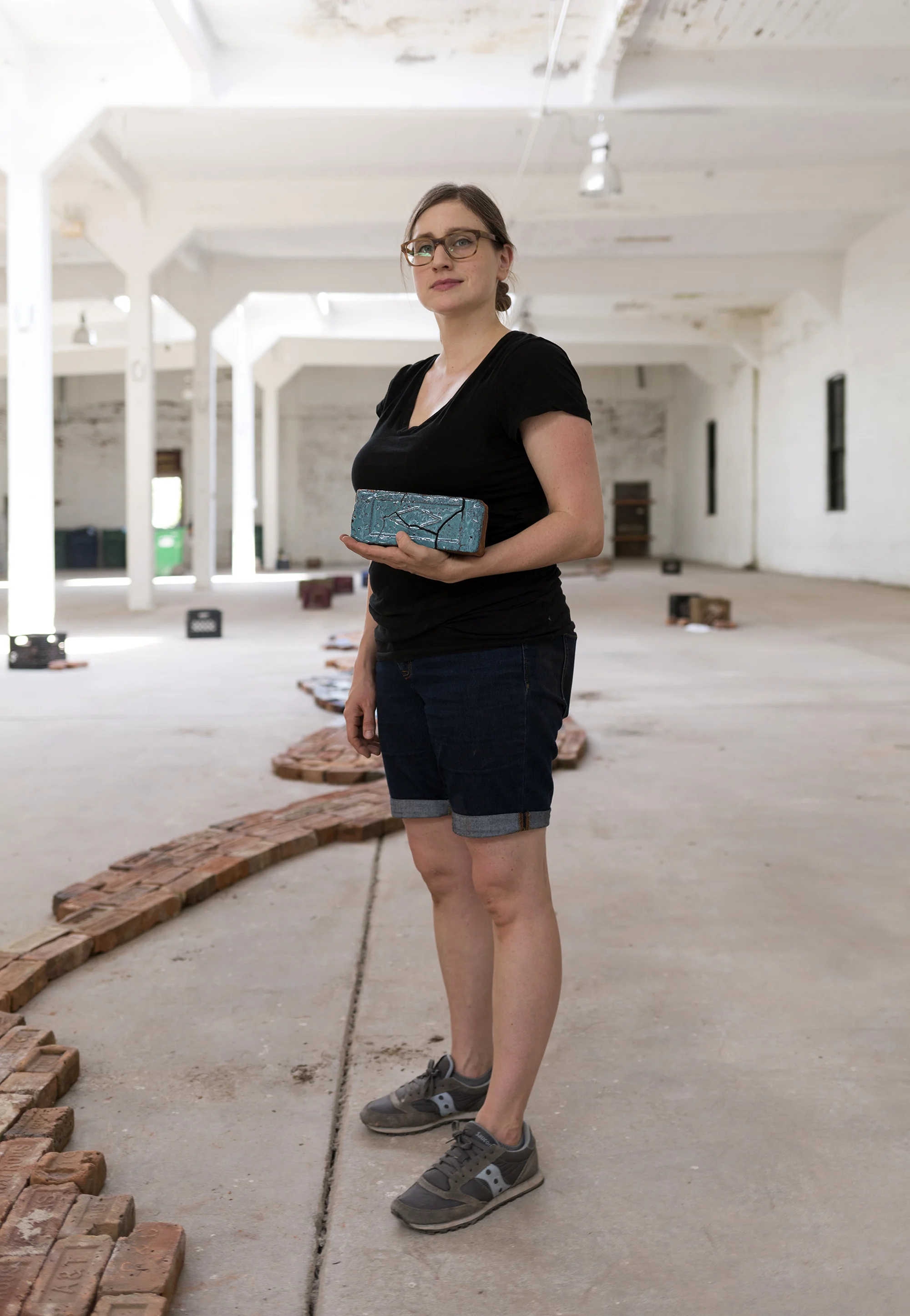
"Hudson River of Bricks" at the Poughkeepsie Trolley Barn

HUDSON RIVER OF BRICKS
Unveiling Celebration: Friday, Sept. 7, 5–7pm
Artist's Talk: Saturday, Sept. 8, 1–2pm
489 Main Street, Poughkeepsie NY 12601
The installation is on view by appointment through October 2018
The Poughkeepsie Trolley Barn is pleased to present “Hudson River of Bricks,” an installation by Julia Whitney Barnes. The unveiling will take place on Friday, Sept. 7, as part of First Friday Poughkeepsie events. The work entails a scale version of the Hudson River, created from bricks made by more than 200 historic Hudson River brickyards each of which marked its bricks with a unique “stamp.” Though the work encompasses thousands of bricks in total, the artist glazed one example from each brickyard a range of greenish blue hues to represent the river's colors as it reflects a variety of skies. Each brickyard name and location is labeled in underglaze, then fired in a modern kiln, before being glazed and given a final firing. Each glazed brick is put in the geographic location along the river where its brickyard existed. The unglazed bricks show the patina of time and various clay body colors.
New York City is one of the most iconic cities in the world and 90% of the city's plentiful brick structures (and infrastructure) were essentially created out of Hudson River mud. The installation brings attention to the rich history of bricks made in the Hudson River area, and also shows the beauty of these utilitarian objects that ceased to be produced here. Nine Poughkeepsie brickyards are included plus dozens more from the immediate area. Viewers can appreciate the work from a historical, artistic and/or local resident background.
“The idea for the installation evolved over several years. Living in Brooklyn, I noticed almost daily that brick edifices were demolished, disassembled into piles and carted off to points unknown. My background is in public art and more intimate work including oil paintings, drawings, etchings, ceramic sculptures and combined media installations. As I was working on a series of paintings and drawings entitled "Bricks and Stones May Break," I began collecting bricks from destroyed buildings and defunct brickyards as reference images. Once I noticed the variety in 'stamps,' I started discovering bricks made from Hudson River clay. Intrigued that their source was so close to the city, I started seeking and exploring their defunct brickyards along the river. I found more than I expected - after two decades of New York City life, I followed these bricks back to their source up the Hudson and relocated to an Arts & Crafts home in Poughkeepsie."
"The more I collected, the more interested – one might say obsessed – I became. I made painterly ceramic sculptures for almost twenty years and started experimenting with different glazes and painting techniques on the bricks. I eventually had a eureka moment that instead of pictorially painting ON the bricks, I would create imagery WITH the bricks. There are museums that contain brick collections, but as far as I've seen, no place to experience the array of bri cks brought to life in something like this installation."
"Dozens of people contributed bricks and information to this project. Meeting with them and hearing stories about their bricks and their lives has been an important aspect of the project. I am always seeking new donations in order to expand the work. As we are living in such a politically divided time, it feels especially significant to interact with people of diverse backgrounds and political views to speak about a neutral topic. I often think about the project as the "United Hudson River of Bricks" in that it brings both people and bricks together.” – Julia Whitney Barnes
To see more please visit: juliawhitneybarnes.com
Instagram: instagram.com/juliawhitneybarnes #hudsonriverofbricks
Please contact Julia to schedule a time to view the installation
Julia Whitney Barnes received her BFA from Parsons School of Design and MFA from Hunter College, both in New York, NY. Whitney Barnes has exhibited throughout the United States and abroad and her work has been featured in The New York Times, Chronogram Magazine, Brooklyn Magazine, The Village Voice, Hyperallergic, and The New York Sun. She is the recipient of fellowships from Arts Mid-Hudson, the Lower Manhattan Cultural Council, Abbey Memorial Fund for Mural Painting/National Academy of Fine Arts, the Gowanus Public Art Initiative, Arts Mid Hudson and completed public art projects in Fjellerup, Denmark through funding from Kulturpuljen, Norddjurs Kommune, Denmark in 2013 and the NYCDOT Urban Art program in 2011. After two decades in NYC, Julia moved up to Poughkeepsie, NY in 2015.
This project is made possible with funds from the Decentralization Program, a regrant program of the New York State Council on the Arts with the support of Governor Andrew Cuomo and the New York State Legislature and administered by Arts Mid-Hudson.
This massive installation is also made possible thanks to the dozens of people who gave me bricks and advised me on all things brick-related. A very special thank you to Roy Budnik at the Mid-Hudson Heritage Center, Andy van der Poel and Fred Rieck at BrickCollecting.com (an excellent resource that was invaluable to researching the history of bricks), Stephanie LaRose Lewison (her impressive collection is well documented here), Jean-Marc Superville Sovak for being my brick-brother and is even loaning me the brick-mobile-pickup last year, Lacey Fekishazy for providing the perfect location to initially install the work at Glen Lily, Mia Blas for assisting me in many things brick related, and my dear husband Sean Hemmerle who has spent countless hours digging through sludge and bugs to brick-hunt with me!!!!!
If you have bricks to donate to the project, please be in touch.

In process view of the installation August 2018.

portrait by Sean Hemmerle
Juror for 2018 NYSCA/NYFA Artists Fellowships in Painting

It was a pleasure (and exhausting) to serve as a juror for this year's NYFA Painting Fellowships.
To take a peak at images of the selected artists click here for Sharon Butler's coverage on Two Coats of Paint.
NYFA has awarded $623,000 to 89 New York State artists.
The New York Foundation for the Arts (NYFA) has announced the recipients and finalists of the NYSCA/NYFA Artist Fellowship program, which it has administered for the past 32 years with leadership support from the New York State Council on the Arts (NYSCA). The organization has awarded a total of $623,000 to 89 artists throughout New York State in the following disciplines: Fiction, Folk/Traditional Arts, Interdisciplinary Work, Painting, and Video/Film. This year’s recipients range in age between 26 and 77. Fifteen finalists, who do not receive a cash award, but benefit from a range of other NYFA services, were also announced. A complete list of the Fellows and Finalists follows.
The NYSCA/NYFA Artist Fellowship Program makes unrestricted cash grants of $7,000 to artists working in 15 disciplines, awarding five per year on a triennial basis. The program is highly competitive and this year’s recipients and finalists were selected by discipline-specific peer panels from an applicant pool of 3,071. Since it was launched in 1985, the program has awarded over $31 million to more than 4,500 artists.
Painting Fellows
Samira Abbassy (New York)
Maria Berrio (Kings)
Gabe Brown (Ulster)
Tom Burckhardt (New York)
Ginny Casey (Kings)
Elizabeth Colomba (New York)
Lisa Corinne Davis (Kings)
Lydia Dona (New York)
Donise English (Dutchess)
Derek Fordjour (New York)*
Clarity Haynes (Kings)
Vera Iliatova (Kings)
Julian Kreimer (Kings)
Joel Longenecker (Dutchess)
Kathryn Lynch (New York)
Sangram Majumdar (Kings)
Tracy Miller (Kings)
Patrick Neal (New York)
David Opdyke (Queens)
Paul Pagk (New York)
Luisa Rabbia (Kings)
Gretchen Scherer (Kings)
Emily Mae Smith (Kings)
Michael Stamm (Kings)
Amy Talluto (Ulster)
Leslie Wayne (New York)
Deborah Zlotsky (Albany)
Painting Finalists
Jordan Casteel (New York)
Clayton Schiff (Queens)
Don Voisine (Kings)
Painting Panelists
Julia Whitney Barnes (Dutchess)
Franklin Evans (New York)
Elliot Green (Columbia)
Sarah McCoubrey (Onondaga)
Mie Yim (Kings)